Weave Metal Mesh Innovation Drives Advancements in Industrial Filtration, Architecture, and Engineering Applications
2026-04-24


In modern industrial materials science, woven metal mesh has become an essential component across a wide range of industries, including filtration, construction, mining, aerospace, chemical processing, and environmental protection. As global demand for high-performance, durable, and multifunctional materials continues to rise, weave metal mesh stands out for its unique combination of strength, flexibility, precision, and adaptability. Its applications have expanded significantly in recent years, driven by advancements in manufacturing technology and increasing requirements for efficiency and sustainability

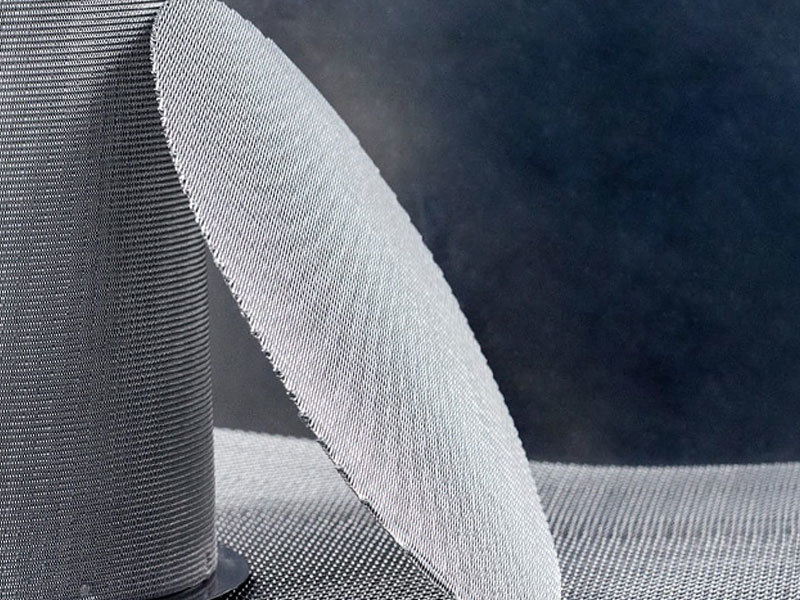
Weave metal mesh is produced by interlacing metal wires or strips in specific patterns, typically including plain weave, twill weave, and Dutch weave structures. Each weaving method offers distinct mechanical and functional properties. Plain weave provides balanced strength and stability, twill weave enhances flexibility and load-bearing capacity, while Dutch weave is optimized for fine filtration applications. The choice of weave structure depends on the intended industrial use, allowing engineers to tailor performance characteristics to specific operational needs.
One of the most important applications of woven metal mesh is in industrial filtration systems. It is widely used in oil and gas refining, chemical production, pharmaceutical manufacturing, and water treatment processes. The precise and uniform pore structure of woven mesh allows for accurate particle separation while maintaining efficient flow rates. In high-pressure or corrosive environments, materials such as stainless steel, nickel alloys, and titanium are commonly used to ensure durability and resistance to chemical degradation.

In addition to filtration, weave metal mesh plays a crucial role in architectural and structural engineering. Modern building design increasingly incorporates metal mesh into facades, ceilings, partitions, railings, and sunshading systems. Its combination of strength and transparency makes it an attractive material for creating visually dynamic yet functional architectural elements. Architects value woven metal mesh for its ability to control light, airflow, and privacy while maintaining a contemporary industrial aesthetic.
The manufacturing process of woven metal mesh requires high precision and advanced machinery. Automated weaving equipment ensures consistent wire spacing, tension control, and pattern accuracy. Depending on the application, wires of varying diameters and materials are selected to achieve desired performance characteristics. Post-processing treatments such as heat treatment, surface polishing, galvanization, or coating are often applied to enhance corrosion resistance, wear resistance, and overall durability.
Material selection is a key factor influencing the performance of woven metal mesh. Stainless steel grades such as 304, 316, and 316L are widely used due to their excellent corrosion resistance and mechanical strength. For more demanding environments, specialized alloys such as Inconel, Monel, or Hastelloy may be used to withstand extreme temperatures, chemical exposure, or mechanical stress. This versatility allows woven metal mesh to perform reliably in both standard and highly specialized applications.
Another significant advantage of weave metal mesh is its adaptability to customization. Manufacturers can adjust parameters such as mesh count, wire diameter, aperture size, thickness, and roll dimensions according to specific project requirements. This flexibility makes it suitable for both large-scale industrial installations and precision-engineered components. Custom surface treatments, including electro-polishing, powder coating, or anti-corrosion coatings, further enhance performance and extend service life.
In environmental applications, woven metal mesh is widely used in air and liquid filtration systems designed to reduce pollution and improve sustainability. It plays an important role in capturing particulate matter, removing contaminants, and supporting clean production processes. As environmental regulations become more stringent worldwide, demand for high-efficiency filtration materials continues to grow, positioning woven metal mesh as a key solution in sustainable industrial development.
The mechanical properties of woven metal mesh also make it suitable for reinforcement applications. It is often embedded in composite materials, concrete structures, insulation panels, and protective systems to enhance strength and stability. In industries such as aerospace and automotive engineering, lightweight yet strong woven mesh materials contribute to improved performance, fuel efficiency, and structural integrity.
From a design perspective, woven metal mesh offers a unique balance between rigidity and flexibility. Its interlaced structure allows controlled deformation under stress while maintaining overall structural integrity. This makes it particularly valuable in dynamic environments where vibration, pressure fluctuations, or thermal expansion are common. Additionally, its open structure allows for ventilation and visibility while still providing protection and separation functions.
Technological advancements are further expanding the capabilities of woven metal mesh. Innovations in nanocoatings, smart materials, and hybrid composites are enhancing corrosion resistance, self-cleaning properties, and functional adaptability. Digital manufacturing and precision automation are also improving production efficiency and consistency, enabling the creation of highly customized mesh solutions for complex industrial needs.
Looking ahead, the future of weave metal mesh is closely linked to the development of smart manufacturing, green materials, and advanced engineering systems. Integration with sensor technology and intelligent monitoring systems may enable real-time performance tracking in industrial environments. At the same time, sustainability trends are driving the adoption of recyclable materials and energy-efficient production methods.
In conclusion, weave metal mesh is a highly versatile and engineered material that combines durability, functionality, and design flexibility. Its wide-ranging applications in filtration, architecture, environmental protection, and structural reinforcement make it an indispensable component in modern industry. As technology continues to advance, woven metal mesh will play an increasingly important role in shaping efficient, sustainable, and innovative engineering solutions.
TAG:
Related Posts
Information about applications of woven wire mesh


No. 56, Weiyi Road, East of Economic Development Zone, Anping, Hebei, China.